Wine tastes different in the mountains
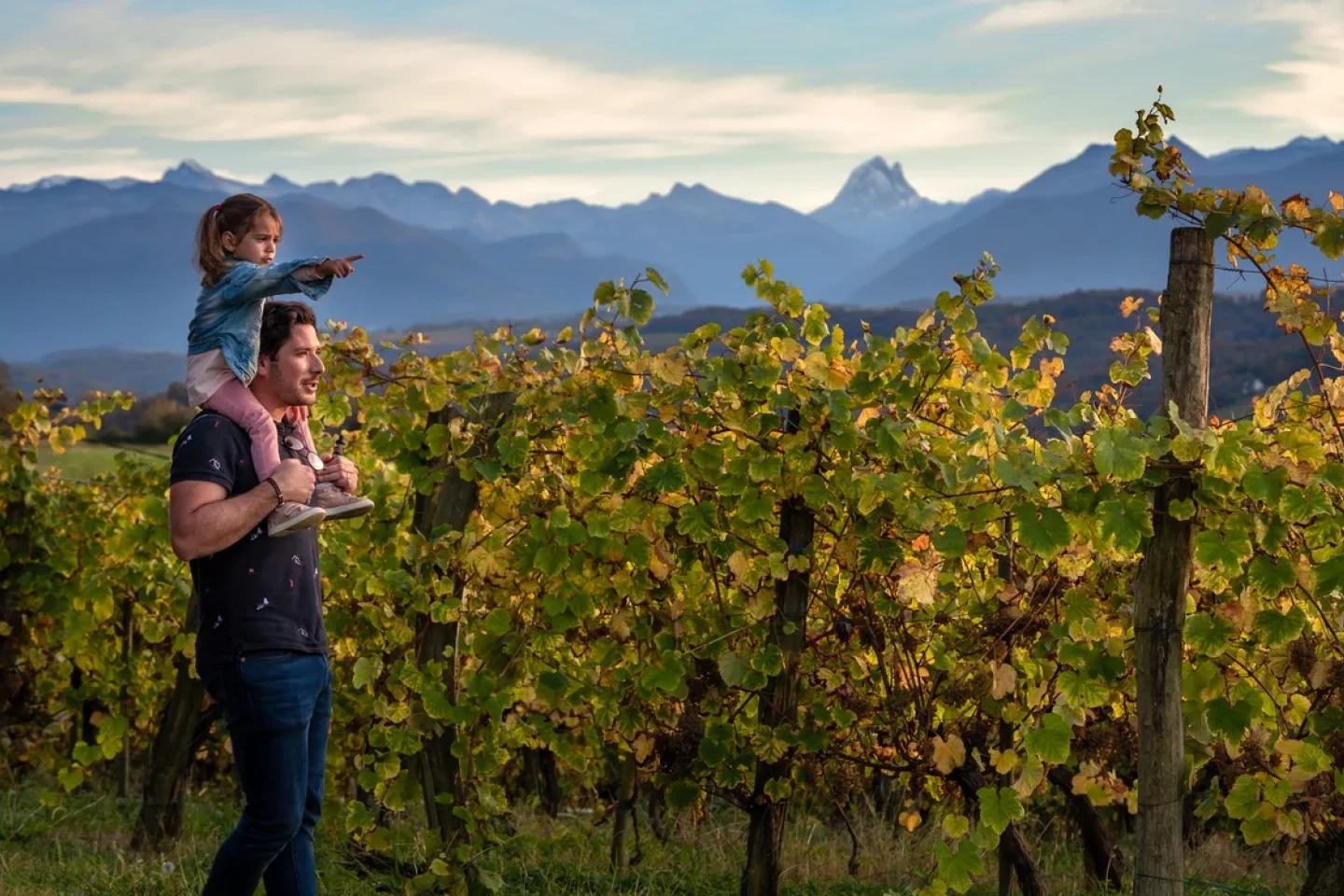
There is a certain idea of a perfect escape that feels almost too easy to imagine. A few days in the mountains, long walks, good food, a glass of wine facing the landscape. The kind of experience that seems accessible, almost obvious, as if it only required a bit of organisation and a few well-chosen addresses.
And yet, once you are actually there — above the Lac de Fabrèges, somewhere near Artouste, with the Pic du Midi d’Ossau quietly dominating the horizon — that simplicity starts to shift. Not because it becomes complicated, but because it reveals a depth that is easy to underestimate from afar.
The association between wine, terroir and mountain environments is often presented as something natural, almost automatic. In reality, it only works when a certain balance is respected. And more importantly, when the experience is understood for what it really is.
Because what happens in the mountains has very little to do with the idea of tasting as we usually know it.
After a few hours of walking, the body is no longer in a neutral state. The effort has changed the way blood circulates, the breathing has slowed and deepened, and the mind — without becoming empty — has lost some of its noise. What remains is a form of attention that is both more focused and more instinctive.
It is within this state that wine is perceived differently.
Acidity becomes more precise, almost sharper, as if it had been drawn more clearly. Tannins, which can sometimes feel abstract in a conventional setting, gain structure and presence. The overall balance of a wine — something often described but not always truly felt — becomes easier to grasp, almost obvious.
This is not a matter of preference or mood. It is a physiological response. A body that has been engaged, but not exhausted, becomes more receptive. More selective, too. Wines that rely on finesse, tension or subtlety tend to reveal themselves in a very direct way. On the contrary, wines that are too heavy, too alcoholic or too demonstrative can quickly feel out of place.
In that sense, the mountain acts as a filter. It does not enhance everything — it clarifies.
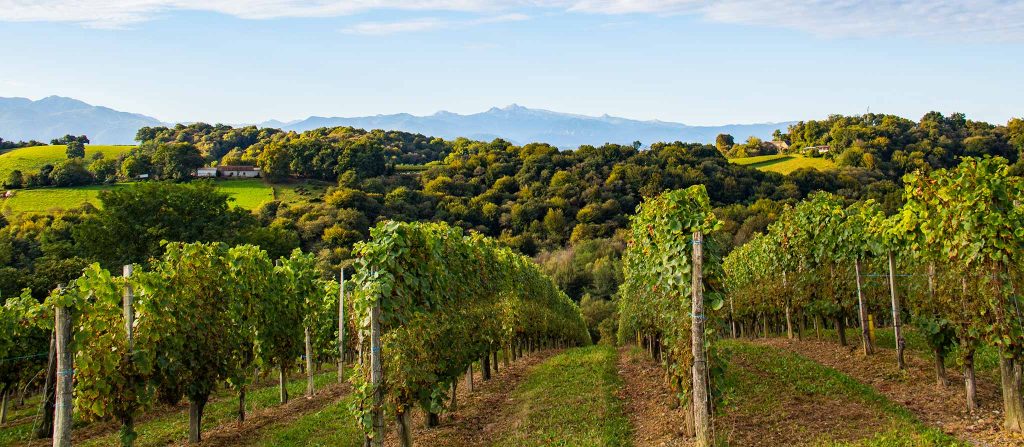
And this clarity extends far beyond the glass itself.
In the Pyrenees, local products are not simply part of a cultural identity or a regional pride. They are the result of very specific conditions, shaped by altitude, climate and the need to sustain effort over time.
The sheep’s milk cheeses from the Ossau Valley, for instance, are dense, structured, often slightly saline — not by accident, but because they are made to nourish in a demanding environment. The black pork from Bigorre develops a richness that is not just about flavour, but about energy. Cured meats, aged slowly in dry mountain air, are designed to last without losing their integrity. Mountain honeys, depending on the altitude and flora, offer profiles that can be both intense and surprisingly complex. Even products that seem more discreet, like the Tarbais beans, play a role in this ecosystem, bringing a form of sustained energy without heaviness.
What connects all these elements is not simply quality. It is coherence.
They belong here.
And that changes the way they are experienced.
Because when food is no longer just something you taste, but something your body actively responds to, the entire perception shifts. The pairing between wine and product stops being theoretical. It becomes almost intuitive.
This is precisely where a curated experience makes all the difference.
In the Ossau Valley, what Pyrenéance proposes is not a succession of moments, but a construction. Over two days, the rhythm is carefully thought out so that nothing feels forced, yet everything makes sense. The first day engages the body progressively, with elevation, movement, and a series of tastings that are integrated into the landscape rather than placed on top of it. A glass of wine by a river does not have the same meaning as the same glass served at altitude, and the experience is designed to make that distinction felt, without ever needing to explain it.
In the evening, the experience shifts again. Not towards excess, but towards interpretation. A meal prepared by a chef who understands the products not as ingredients, but as expressions of the territory. The approach is precise, but never demonstrative. The goal is not to transform, but to reveal.
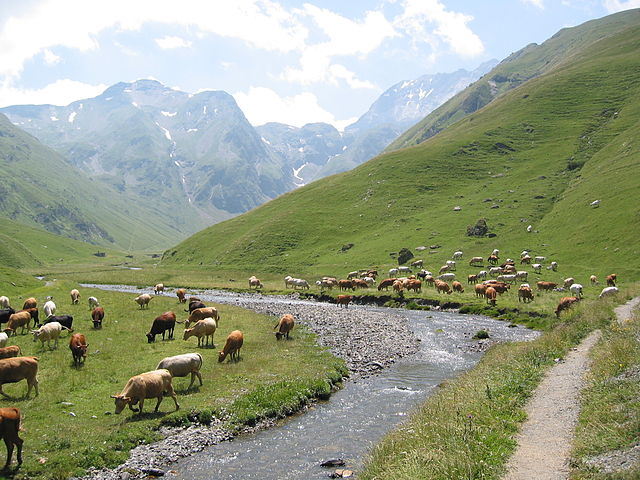
The following day unfolds differently.
Slower, more grounded, with a brunch that restores rather than surprises, and a new perspective on both the landscape and the palate. What was discovered the day before becomes clearer, more anchored.
What emerges from all of this is not a collection of highlights, but a form of alignment.
Between effort and reward.
Between landscape and taste.
Between what is perceived and what is understood.
And perhaps this is where the idea of luxury quietly changes.
Not as something that is added, but as something that becomes evident.
Because yes, wine tastes better in the mountains.
Not because the wine itself has changed, but because the conditions in which it is experienced are fundamentally different. Because attention is different. Because the body is involved. Because the moment has been built, not just accessed.
And once that has been felt, it becomes difficult to return to a more superficial way of tasting.
Not impossible. Just… less interesting.
So if you are still reading this, chances are that this weekend in the Ossau Valley has already started to resonate with you more than expected. Not as a simple getaway, but as something you would actually want to experience, properly.
In that case, there is not much left to say.
Photo credits: Pau Tourisme / Tourisme 64 / Ramoun